




The Outlying Fells of Lakeland
The Outlying Fells of Lakeland was published in June 1974 and was dedicated to:
“THE OLD-TIMERS ON THE FELLS”
<<>>
The Outlying Fells of Lakeland guidebook was not originally part of Wainwright’s overarching vision. He had successfully achieved his primary goal: crafting seven Pictorial Guides spanning 13 years that comprehensively cover the main regions of the Lake District. In his “Personal Notes in Conclusion“ section of The Western Fells guidebook, Wainwright rejects Book Eight: The Outlying Fells.
However, many walkers of a certain age had grown alongside Wainwright and were hesitant to bid farewell to their hiking adventures. Urged by their requests and his wife, Betty’s encouragement, Wainwright eventually yielded and agreed to create another guide. He felt he still had the capacity for at least one more significant guidebook. Despite its exclusion from the original series, numerous readers still regard this title as the unofficial ‘Book Eight’.
This new book project was initially titled The Lesser Fells of Lakeland, but approximately a year before publication, Wainwright changed it to The Outlying Fells of Lakeland. The guide swiftly gained popularity after its release and became a major bestseller. The book comprises 56 chapters, each dedicated to exploring the lesser fells of Lakeland.

Outdoor writer and artist Mark Richards shared a close acquaintance with Wainwright. At 22, Richards joined the enigmatic fellwanderer on multiple walks for this guide, honing his skills under Wainwright’s guidance. Since then, Richards has written numerous guidebooks and is still actively engaged in the outdoor industry.

<<>>
A First Edition is identified by:
- Yellow case with gold blocking
- £1.50 price on the dust jacket
- No impression number
A unique feature of this guide is the page with Wainwright’s upcoming book statement, which reads:
In preparation:
SCOTTISH MOUNTAIN DRAWINGS
VOLUME ONE: The Northern Highlands
From the fifth impression, the phrase ‘In preparation’ was omitted, and after the minor edit, this section remained unaltered for the remainder of its tenure with the Westmorland Gazette.
Typically, once a book was published, the Gazette did not revisit it unless revisions were necessary. Given Wainwright’s busy schedule during the 1970s, he may have overlooked it, resulting in no subsequent updates.

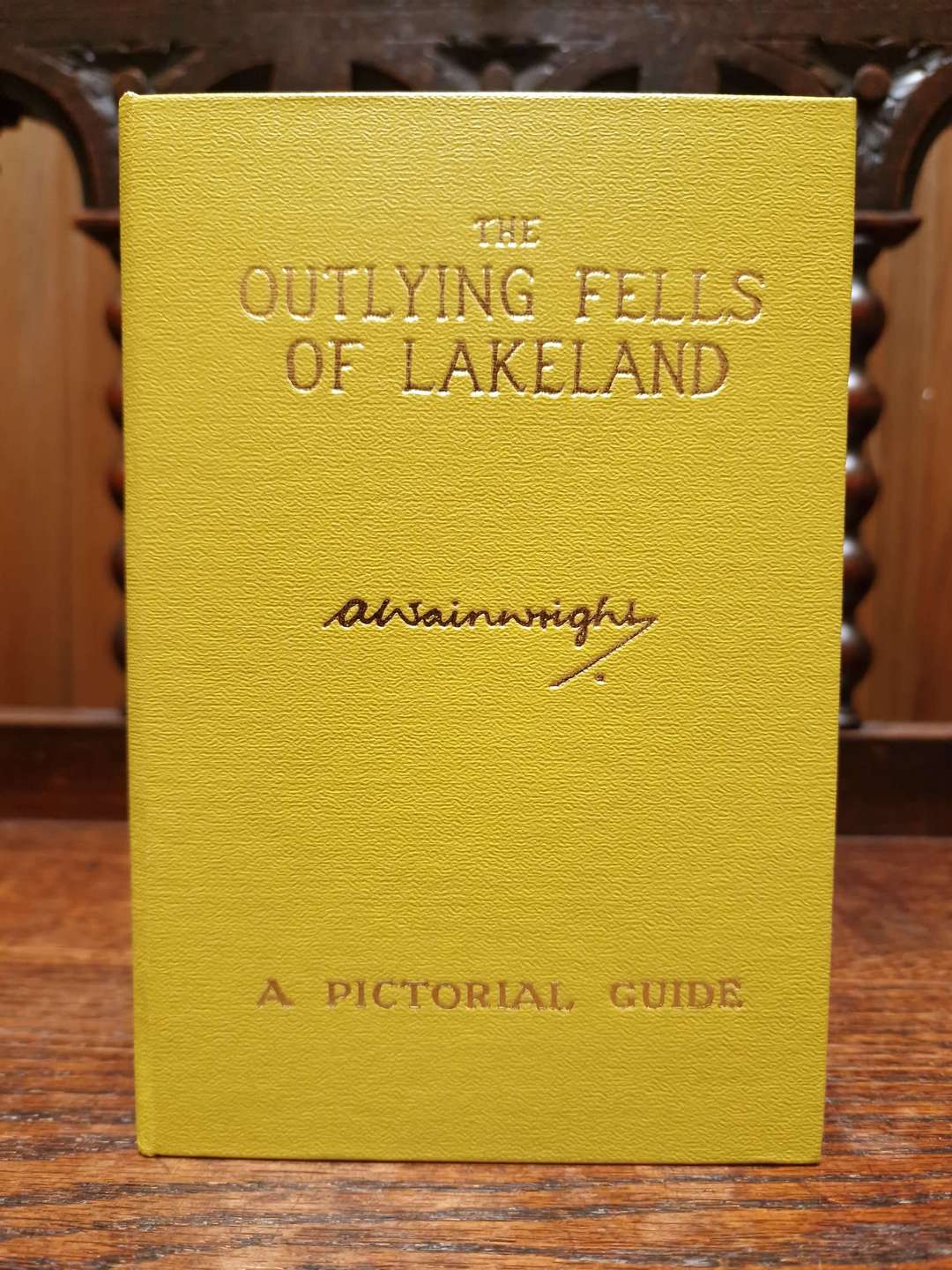


The Outlying Fells of Lakeland stood out as the sole guidebook priced at £1.50, while the others were priced at £1.40 in the mid-1970s. Starting with the tenth impression, the Gazette departed from Wainwright’s handwritten dust jacket price, transitioning to printer’s type.


The material shortages of the 1970s affected all guidebooks, as evidenced by several early impressions that lacked consistency in their case types.
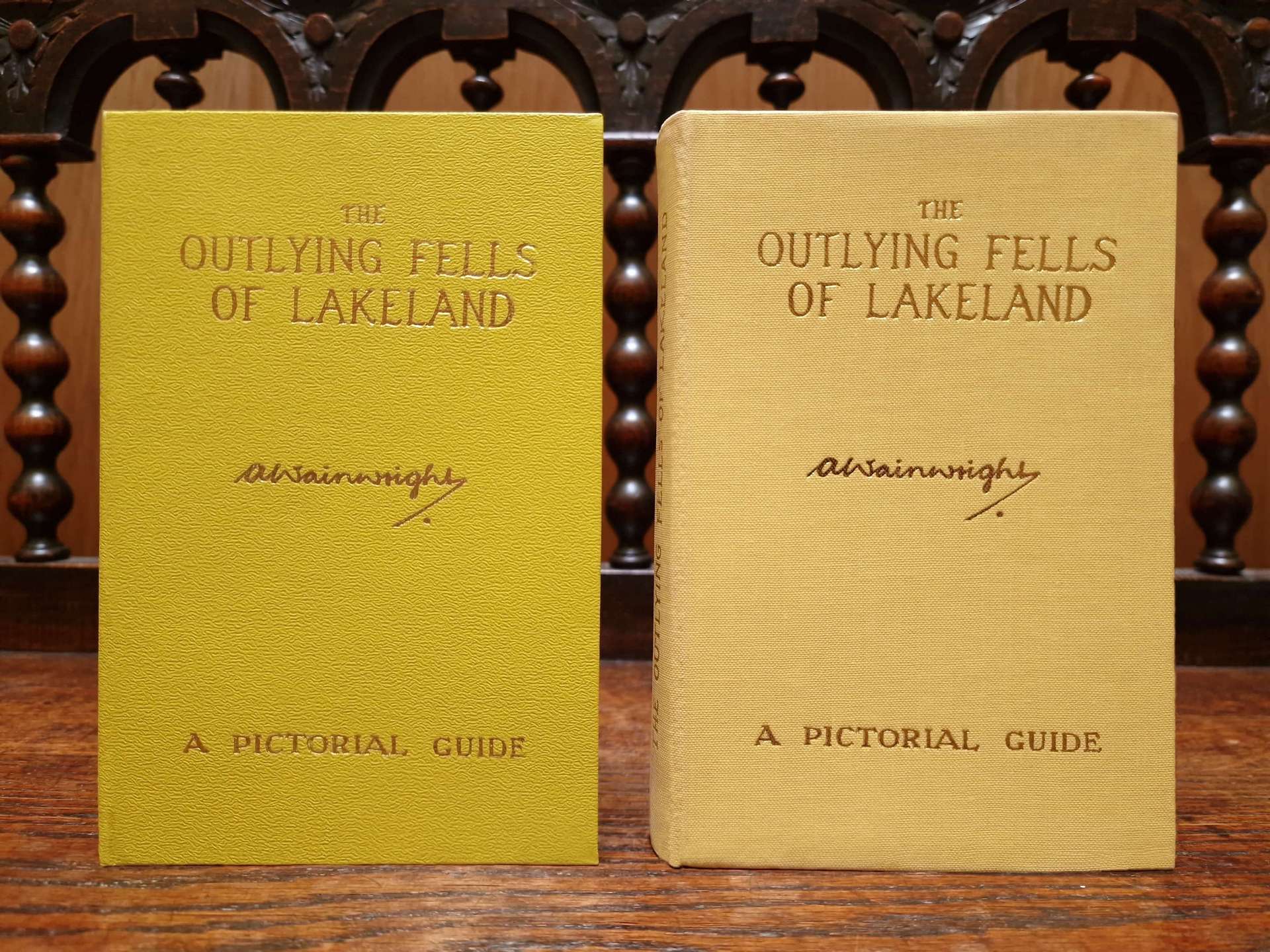
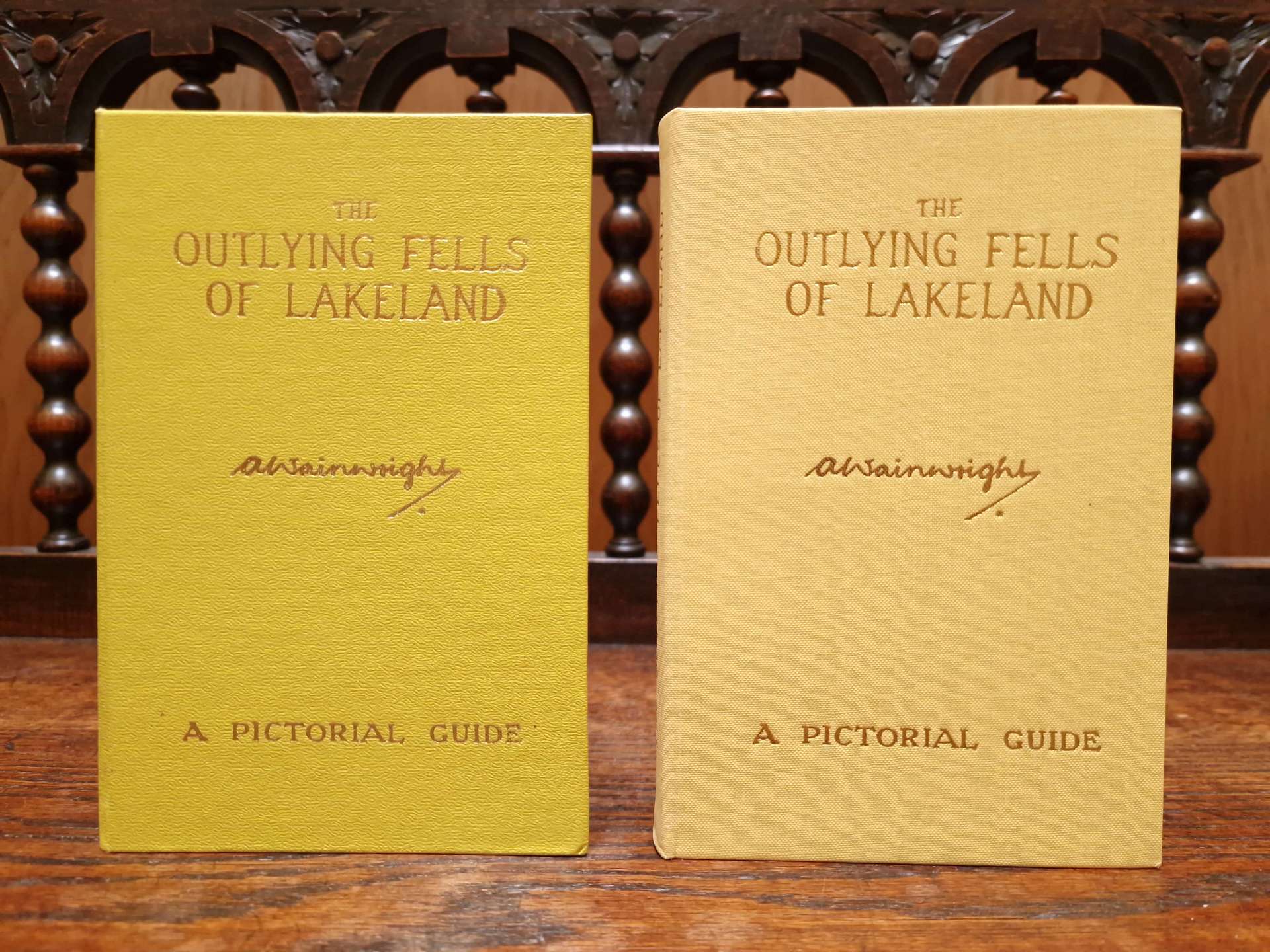

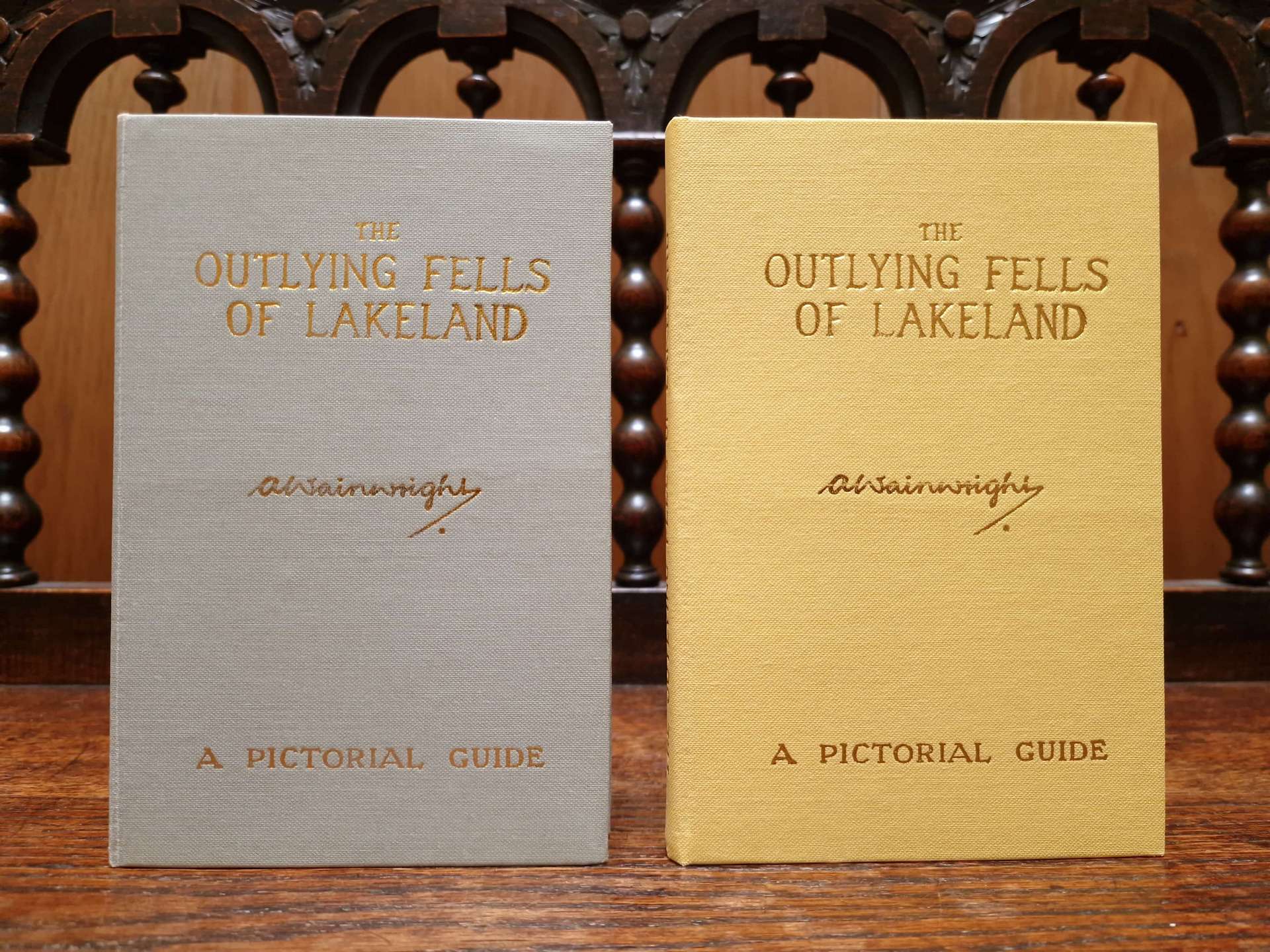

As I embarked on my journey to assemble a collection of guidebooks, I soon realised the extent of the physical changes that had occurred over their printing history. Adhering to strict criteria, only guidebooks in impeccable condition found their place within my curated collection. Within a few years, I achieved a significant milestone with The Outlying Fells of Lakeland, having acquired every impression from all publishers.
Shortly after sharing this revelation on social media, I received a call from Georgina Cooke, a former Westmorland Gazette employee from 1973 to 1989. She served as the publishing order clerk. Having resided in Kendal with her husband, David, for numerous years, Georgina expressed her admiration for my collection of Outlying Fells books. However, she also brought to my attention that, according to her knowledge, the collection was not yet complete.
“Really?” I responded.
“Yes,” she replied. “I have a fourteenth impression paperback here, which I have had in my possession for nearly forty-five years.”
“Surely you are mistaken?”
“Certainly not! I will email you a photograph of it.”
A surge of excitement coursed through me as I opened the email. Georgina now had my full attention as she relayed her story:
During the mid-1970s, the Gazette actively sought ways to reduce printing costs. Harry Firth, the General Printing Manager, had recently completed the fourteenth impression of The Outlying Fells of Lakeland. Before the books were bound, he experimented by producing a paperback copy. His rationale was rooted in the belief that the Outlying Fells’ relatively low heights made them suitable for a paperback format, so durability wasn’t a major concern on the lower hills. Meanwhile, the seven other Lakeland guides would retain their hardback format.
Any modifications to the guidebooks by the Gazette were subject to Wainwright’s approval. Harry took the initiative to present the paperback to Wainwright during a routine visit to Kendal Green. However, the Lakeland author expressed dissatisfaction with the paperback format and insisted that the title remain casebound.
Upon Harry’s return to the office, he was about to discard the book before offering it to Georgina, who immediately accepted and took it home. Georgina held onto it for many years, nearly forgetting it until she came across a blog post about my collection.
Georgina and her husband, now residing in Bingley, graciously invited my wife and me to meet them and view the book. Despite being aware of the facts, the reality sank in when I saw the guide. It left me pondering if this was indeed a one-of-a-kind Pictorial Guide. Hearing stories from her Gazette years in the 1970s, when Wainwright operated in the shadows and gave little publicity, added an interesting layer to our visit.
As we prepared to leave, Georgina pressed the book into my hands, adamant that I preserve it in my archive. Refusing to accept any objections, she insisted I keep it. Delighted by this unexpected gift, I consider this book an important part of my collection.
This singular guide introduces another dimension to Wainwright’s publishing and printing. Discovering something of this nature changes the landscape entirely and suggests that other rare Pictorial Guides may still be waiting to be found. It continues to fuel my fascination with this aspect of Wainwright’s story.

In 1980, the gold blocking on the front of the cases was discontinued, a strategic decision that proved both time-consuming and cost-effective for the Gazette. The need for gold blocking was rendered obsolete by the introduction of dust jackets.

By the mid-1980s, The Outlying Fells of Lakeland had reached its thirty-first impression, whilst A Coast to Coast Walk had reached its thirty-fourth, resulting in a relatively small disparity between them. However, in 1986, the practice of assigning impression numbers was discontinued, much to the disappointment of those who found them informative indicators of a guide’s popularity. Additionally, in 1988, the actual printing of the books was transferred to Titus Wilson, even though the Gazette retained its role as the publisher.

In June 1992, Andrew Nichol, the General Printing and Book Publishing Manager, concluded his 23-year tenure by retiring at 60. Before his retirement, he named Michael Joseph as the new publisher of the guidebooks and facilitated the transfer of publishing rights to ensure a smooth transition.

Under Michael Joseph’s leadership, the guidebooks were scheduled for a relaunch in April 1992. Chris Jesty handwrote the preliminaries, adding a personal touch to the process, while Titus Wilson handled the printing.


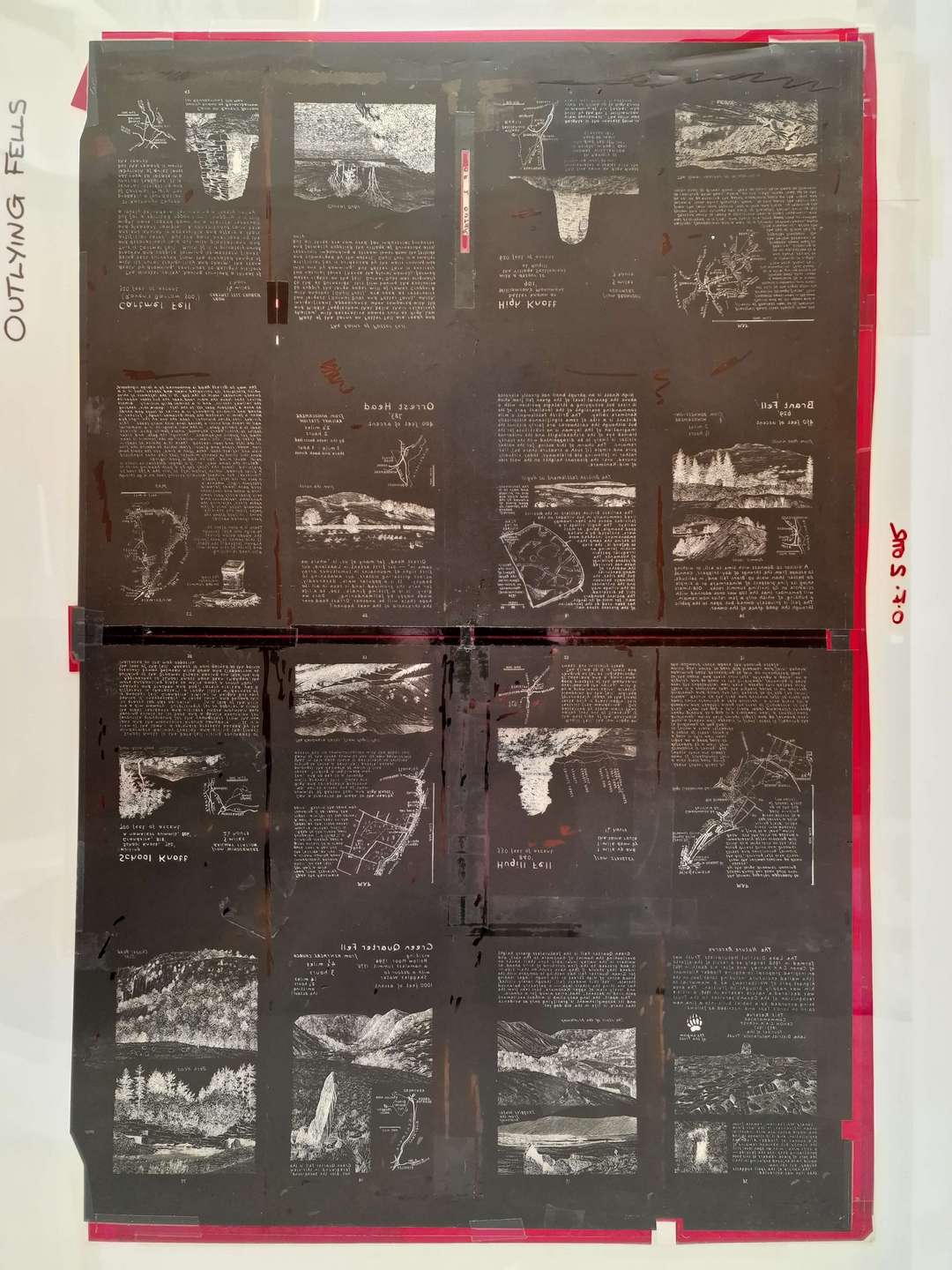
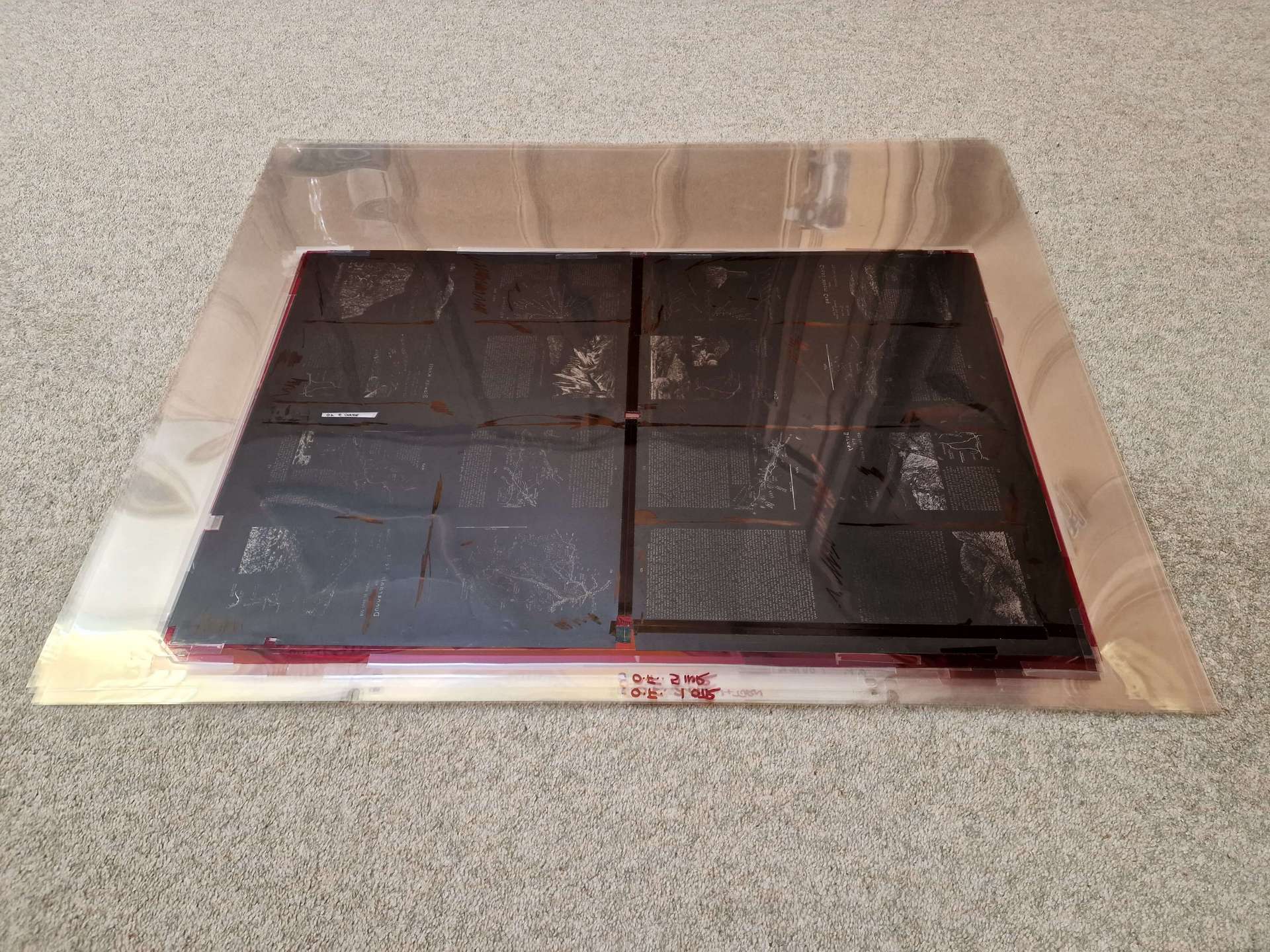
Several months post-launch, the printing of the guidebooks shifted substantially to Clays Ltd in Suffolk, delivering a significant blow to Kendal. Titus Wilson retained the original printing materials for the Wainwright books, while Michael Joseph received duplicate negatives to maintain continuity of the printing process.
Only two impressions of The Outlying Fells of Lakeland were printed during Michael Joseph’s tenure as the publisher. The question arises: was this title experiencing a gradual decline in popularity?

From left to right:
The Outlying Fells of Lakeland, M. Joseph, 1992
The Outlying Fells of Lakeland, second impression, M. Joseph, 1998

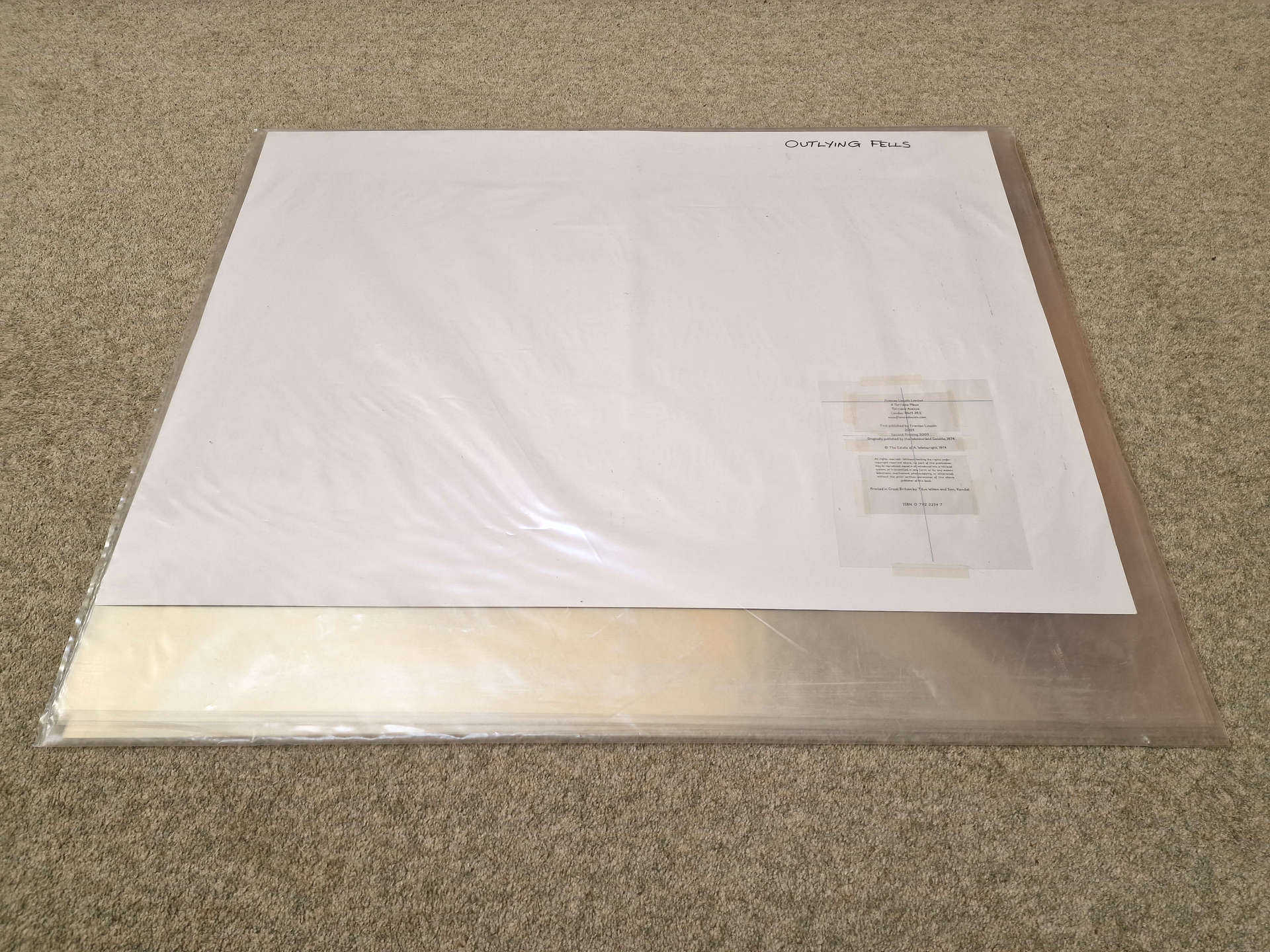
In response to dwindling sales due to the 2001 foot-and-mouth outbreak, Frances Lincoln secured the bid to republish the guides, bringing them back to their original home in Kendal. The announcement of this positive development created a ripple effect across various media outlets.
With an April 2003 launch date looming, Frances Lincoln faced a tight timeframe of just a couple of months to print the books. However, the demand for the guidebooks exceeded expectations, prompting Titus Wilson to expand their premises to meet the surge in orders. This expansion addressed demand and brought positive news, generating new job opportunities in Kendal.
Maintaining their momentum, Frances Lincoln marked the occasion by producing new 50th Anniversary Edition guides in 2005. This initiative kick-started a comprehensive program to revise all 12 guidebooks, collectively known as the Second Editions.
Tasked with this significant undertaking, Chris Jesty dedicated a decade to revising all twelve guidebooks. However, Titus Wilson’s involvement in this effort was short-lived. In 2006, Frances Lincoln decided to relocate printing from Kendal and have it done abroad, citing escalating printing costs as the primary reason for the strategic shift.

From left to right:
The Outlying Fells of Lakeland, F. Lincoln, 2003
The Outlying Fells of Lakeland, second printing, F. Lincoln, 2003

In 2007, Frances Lincoln released The Outlying Fells of Lakeland – Centenary Edition, commemorating the hundredth anniversary of Wainwright’s birth. This special edition was printed in Singapore and initially priced at £12.99, which was later increased to £13.99. Notably, the gold blocking on the front of the case made a comeback for the first time since 1980, adding a touch of nostalgia to the centenary edition.


From left to right:
The Outlying Fells of Lakeland (CE), F. Lincoln, 2007
The Outlying Fells of Lakeland (CE), second printing, F. Lincoln, 2007
The Outlying Fells of Lakeland (CE), third printing, F. Lincoln, 2007
The Outlying Fells of Lakeland (CE), fourth printing, F. Lincoln, 2007
Behind-the-scenes shifts in publishing occurred, and in 2011, Quarto acquired Frances Lincoln. The Outlying Fells of Lakeland – Second Edition was published in the same year and priced at £13.99. Chris Jesty, deeply engrossed in the project, took pleasure in working on this title and personally guided me on a delightful walk over Whitbarrow Scar, sharing some highlights from the new edition. In 2020, the Wainwright Society republished this title.

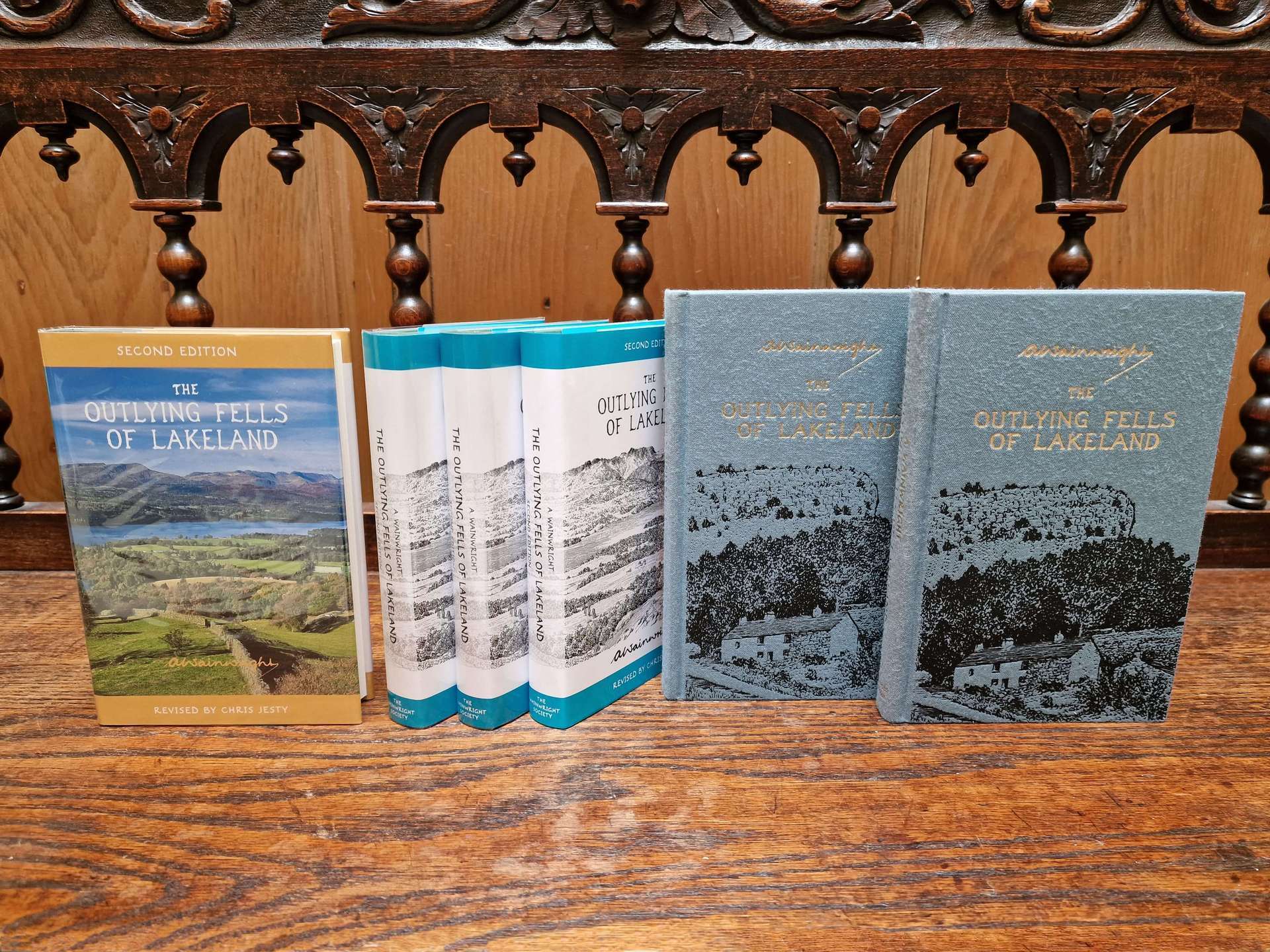
From left to right:
The Outlying Fells of Lakeland (SE), F. Lincoln, 2011
The Outlying Fells of Lakeland (SE), W. Society, 2020
The Outlying Fells of Lakeland (SE), second impression, W. Society, 2020
The Outlying Fells of Lakeland (SE), third impression, W. Society, 2020
The Outlying Fells of Lakeland (RE), low gsm paper, F. Lincoln, 2009
The Outlying Fells of Lakeland (RE), high gsm paper, F. Lincoln, 2009
This collection comprises a comprehensive collection of The Outlying Fells of Lakeland books, including every impression/edition published by various publishers from its initial publication in 1974 to 2022. It offers a historical perspective on the changes in printing, design, and editorial decisions made over five decades.
